
Quick heads-up
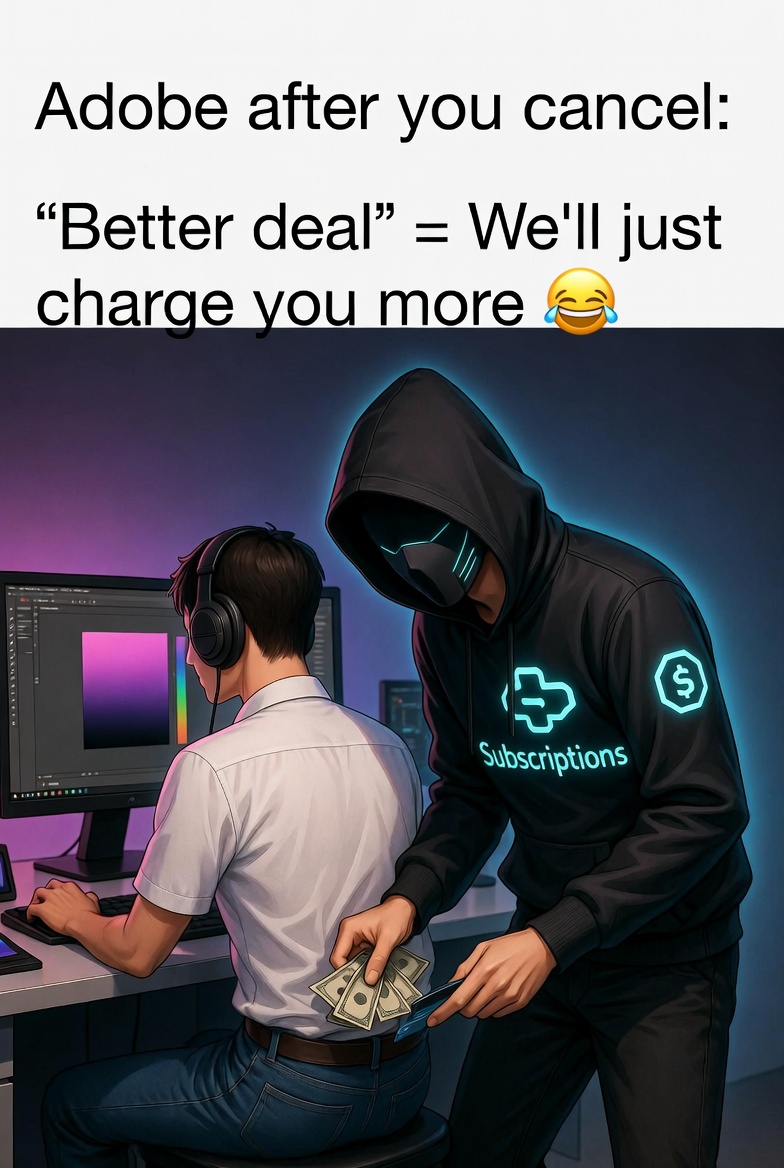
From someone who’s usually pretty on top of his tech subscriptions: I just discovered I’ve been getting quietly charged $11.99 every month for an extra Adobe Photoshop account I canceled ages ago. As someone who is passionate about photography and editing, I was shocked to find that I had been paying for a service I no longer used. This brings to light the importance of being vigilant with subscriptions; it’s easy to lose track of what we’re signed up for, especially with so many services available today.
No renewal emails. No alerts. I only found out because my Adobe "Account manager" sent me a “great deal” offer… which turned out to be him canceling the ghost subscription and then bumping my main one up by another $10 a month. The account manager was so pushy and tone-deaf that it left a really bad taste. I kept asking why I needed to spend an extra $10 every month and he did not have a good answer. I finally hung up on him. This experience made me realize how critical it is to maintain awareness of customer service interactions and to advocate for ourselves when companies try to upsell or manipulate us into paying more.
I immediately canceled the phantom account again and asked my credit card company to dispute the past charges. Lesson learned: even big companies can let stuff slip through the cracks (or worse) to their advantage and don't care about you even if you are a very long-time customer. This situation has prompted me to think critically about my digital habits and how often I utilize my subscriptions. Are they truly valuable, or are they just draining my resources? It's essential to regularly evaluate our subscriptions and make decisions that align with our current needs.
Double-check your subscriptions, especially the ones you thought you’d already ended. Those silent monthly hits add up fast. It's wise to set a reminder every few months to review all recurring charges on our statements. By doing so, we can identify any subscriptions that have outlived their usefulness. In fact, many experts recommend creating a 'subscription audit' checklist where you can categorize your subscriptions based on usage and satisfaction.
Why Consider Alternatives to Adobe?
Anyone else run into this kind of thing with Adobe or other big subscription services lately? Switching to alternatives is looking pretty good right now. Maybe On1 or other software options like GIMP, which is a powerful free alternative for image editing that can rival many of Adobe's tools. Additionally, Affinity Photo offers a one-time purchase model that can be more cost-effective for users who prefer to avoid subscription fees. Exploring these alternatives not only helps save money but may introduce users to innovative features that enhance their editing experience.
Stay sharp out there,
Stay sharp out there, and remember, exploring alternatives not only empowers us financially but also opens doors to new creative possibilities. The world of digital tools is ever-evolving, and being adaptable can lead to discovering the perfect fit for our artistic vision.
Lastly, don't forget the power of free trials. Many alternative software options offer free trials, allowing users to test out the features and workflow before committing. This practice can be incredibly beneficial in ensuring that we choose a tool that genuinely meets our needs and fits seamlessly into our creative process.
Another factor to consider is the community and resources available for the software. A robust community can provide tutorials, plugins, and support that can significantly enhance the user experience. Engaging with forums and user groups can help us learn new techniques and discover shortcuts that save time and increase productivity.
As we explore these alternatives, it’s also essential to weigh the pros and cons of each option. For example, while GIMP is free, it may not have the same level of support or user-friendly interface compared to Adobe products. Affinity Photo, on the other hand, while requiring payment, has a one-time fee which can be appealing in the long term compared to ongoing subscription costs. Evaluating user reviews and seeking recommendations from fellow photographers and editors can guide us in selecting the right tool.
Moreover, it's worth considering platforms that provide flexibility. For instance, platforms like Capture One have gained popularity for their powerful tethering capabilities and color grading features, making them a favorite among professional photographers. Others, like Luminar AI, offer intelligent editing tools that streamline workflows and yield stunning results without the complexity often associated with traditional software.
Michael